Thursday, June 27, 2013

5 lessons learned from a beginners try at composting...


Second shot at composting in my new compost container. Ill spare you guys the photo of the first try. Moldy strawberries and eggshells are not very attractive. Here are five lessons learned from the failure:

1. Sometimes it doesn't pay off to jump right in. Usually this is how I operate. Spare me the details, just tell me what I need to do to get started. This mentality has proven not to work in the gardening sector. Informed baby steps are what I'm now practicing these days... At least when it comes to vegetables. 

2. Citrus is a no-no. All those orange peels, lemon wedges, and peach skins I was shoving into the container really aren't the best thing for the soil. They make the pH all screwy. 

3. Here's the kicker: you have to start with soil. Okay for all you gardening geeks out there, please don't laugh. I had no clue that I would have to start by putting some dirt in my bin. Makes perfect sense looking back on it...

4. Balancing dry & wet. So if your compost gets a little dry, add something a little damp. If it gets too moist, add some newspaper shreds. Simple. And probably would have staved off all that mold in round 1. 

5. Stir the pot. I usually like to stir the pot, but not so much in this case. I just really want to put the lid on it and forget about it. But I guess sometimes you gotta make sacrifices to get the results you want. 

There you have it, 5 things I've learned about composting. It's a start. 

Tuesday, June 25, 2013

My tomatoes are growing!


Try as I might, I'm really not the best gardener. I'd really like to be. I pick up gardening magazines, pin gardening tips, and dream about my future edible backyard oasis. But every time I try to make my dreams a reality, I fail miserably. I've finally figured out why. I haven't yet stopped to really pay attention to what each plant needs. Plants are like children with their own personalities and desires. Some love water and others are picky eaters. Some love to play outside in the hot sun all day and others would rather be somewhere cool and shaded. I'm taking it slow and learning what each plant really needs so that I can someday have that dream garden. For now, I start humbly with tomatoes and basil. So far? I'm turning out to be a decent mom to them both. 

Wednesday, August 15, 2012

How REAL Soap is Made


Lately I've been getting the question, "Is there such a thing as lye free soap?" The answer? Nope. All soap is made with the chemical reaction between a base and alkali. Now, you might say, "I don't want to wash with anything that has lye in it!" Well, me either. That's why I don't. That's why I would never expect my customers to. 
When the soap is cured, the base and alkali turns into a salt leaving no trace of lye (or sodium hydroxide) in the final bar. When someone says "Here is a recipe for lye-free soap..." the recipe calls for already made soap (such as glycerine soap) which has been made using lye.
Confused? Here is a fun, informative illustration about how REAL soap is made:

THE CAST OF CHARACTERS:

Let's say you have a great big grassy field. On one side of the field
are lurking a bunch of hungry wolves. The middle of the field is filled
with soft, fluffy bunnies, and of course, the hungry wolves want to eat them.

So the wolves run into the field and start eating bunnies.


But an interesting thing happens. Every time a wolf eats five bunnies -
*Pop!* - he changes into an energetic busy Border Collie and some
peaceful, soothing sheep! So, if there had been 500 bunnies in the field to
begin with, and 100 hungry wolves, all the wolves would eat all the
bunnies and you'd be left with a field full of busy Border Collies and
soothing sheep but no more bunnies or wolves!


This is what happens when you pour the lye solution into the oils - the
lye "consumes" the oils and the resulting transformation produces
saponified oils (soap) and glycerine. This is the process called
"Saponification".

And what if there had been only 450 bunnies in the field to begin with?

Well, then the 100 hungry wolves would have eaten all the bunnies and most
of them would be transformed into useful Border Collies and soothing Sheep.
But there would still also be 10 hungry wolves left over with no bunnies
left to eat, and you'd probably get bitten. Not good!


This is why it is so important to make sure you have always calculated
and measured your recipe carefully. You don't want to end up with any
"leftover lye" when you're finished!

On the other hand, maybe you really like having a few soft, fluffy

bunnies around. So you make sure that there are five hundred
AND FIVE bunnies in the field before you let the 100 hungry wolves
in. NOW after all the wolves have eaten their share of bunnies
and been transformed into useful Border Collies and soothing Sheep
you will still have five soft, fluffy bunnies left over and NO hungry wolves.


This is "Superfatting". Superfatting is when you deliberately add more oil to
your recipe than the lye can consume. In addition to saponified oils and
glycerine, a superfatted soap will also contain some oils which have been

left unchanged by the saponification process and still have their original
properties.

So having leftover bunnies is a good thing, right? And if 5 leftover
bunnies is a good thing, then 10 leftover bunnies would be even better,
right? Or 15 leftover bunnies? Or more? The more leftover bunnies
the better, right?


Well, maybe, and maybe not. If you have too MANY leftover bunnies,
they'll get in the way of the Border Collies who are trying to do their

job and distract them. Or the bunnies might eat all the grass in the
field and then the field is no good for sheep or anything else. So while
having leftover bunnies is certainly better than having leftover wolves,
you still need to know just how many leftover bunnies you can have
before you start getting too much of a good thing!


Remember this when you decide to superfat a soap recipe. A

superfatted recipe can give you a nice mild soap with the added bonus
of insurance against having any leftover lye. But if you have too much
"leftover oil", then your soap won't be a very useful soap any more!


What it all comes down to is you gotta know your bunnies!


http://www.canis-art.com/soaping.htm
Text and Images ©2008 Canis Art - All Rights Reserved

Saturday, April 28, 2012

Mother's Day Newsletter with 30% off Coupon!

If you'd like to sign up for our email newsletter for great discounts, coupons and a peak behind the scenes at Bambu Earth, click here! The sign up is on the right hand side of the page.

  
In This Issue
Shipping Deadlines
What Mom Loves
Gift Certificates
Quick Links
Follow Me
Join Our Mailing List

Greetings!  

Mother's Day is just a short two weeks away! We have the perfect items your mom will love. Shop our gift section for our French Milled Floral Goat Milk Soap Set, our Chocolate Body Care Set, or one of our many luxury soaps wrapped in seeded paper! Yup, just plant the label, and watch wildflowers bloom. It's a gift your mom is sure to LOVE! ♥
Shop Now!

 
Save 30%
Buy your mom a special gift without breaking the bank. Use coupon code: MOMSTHEBEST for 30% off of your order at www.bambuearth.com
 
Offer Expires: 4/30/2012
Order in time to Ship!

Make sure you place your order in time for  
Mother's Day!  
 
STANDARD: 
Order by
May 7
to receive your order by May 12.
EXPEDITED: 
Order by
May 10
to receive your order by May 12.  
   
What Mom loves:

Spring has sprung. We are busy here cranking out our French Milled Floral Sets - our most popular spring gift set. This collection of Lavender, Rose, Chamomile and Jasmine soaps are made with floral waters and goat milk, making a smooth, creamy and very long lasting bar. Truly luxurious, this set makes a wonderful gift for Mother's Day, Birthdays, Bridal Showers, Housewarming Gift, or just because. ♥
Use the coupon code above to buy one of these sets at 30% off now!


Not sure what Mom wants?
 
Give her a Bambu Earth gift certificate and let her shop for her favorite products! She'll get to shop and pamper herself!


Bambu Earth™ Products are always:

* MADE WITH ORGANIC INGREDIENTS
* Phthalate Free
* Paraben Free
* Sulfate Free
* No Synthetic Fragrances
* No Synthetic Dyes
* Sustainable Palm Oil
* Never Tested on Animals 

Thank you for being a valued customer.

Warmest Regards,


Amber Hawthorne
Bambu Earth

Wednesday, April 18, 2012

Giveaway!


Enter our Giveaway HERE!

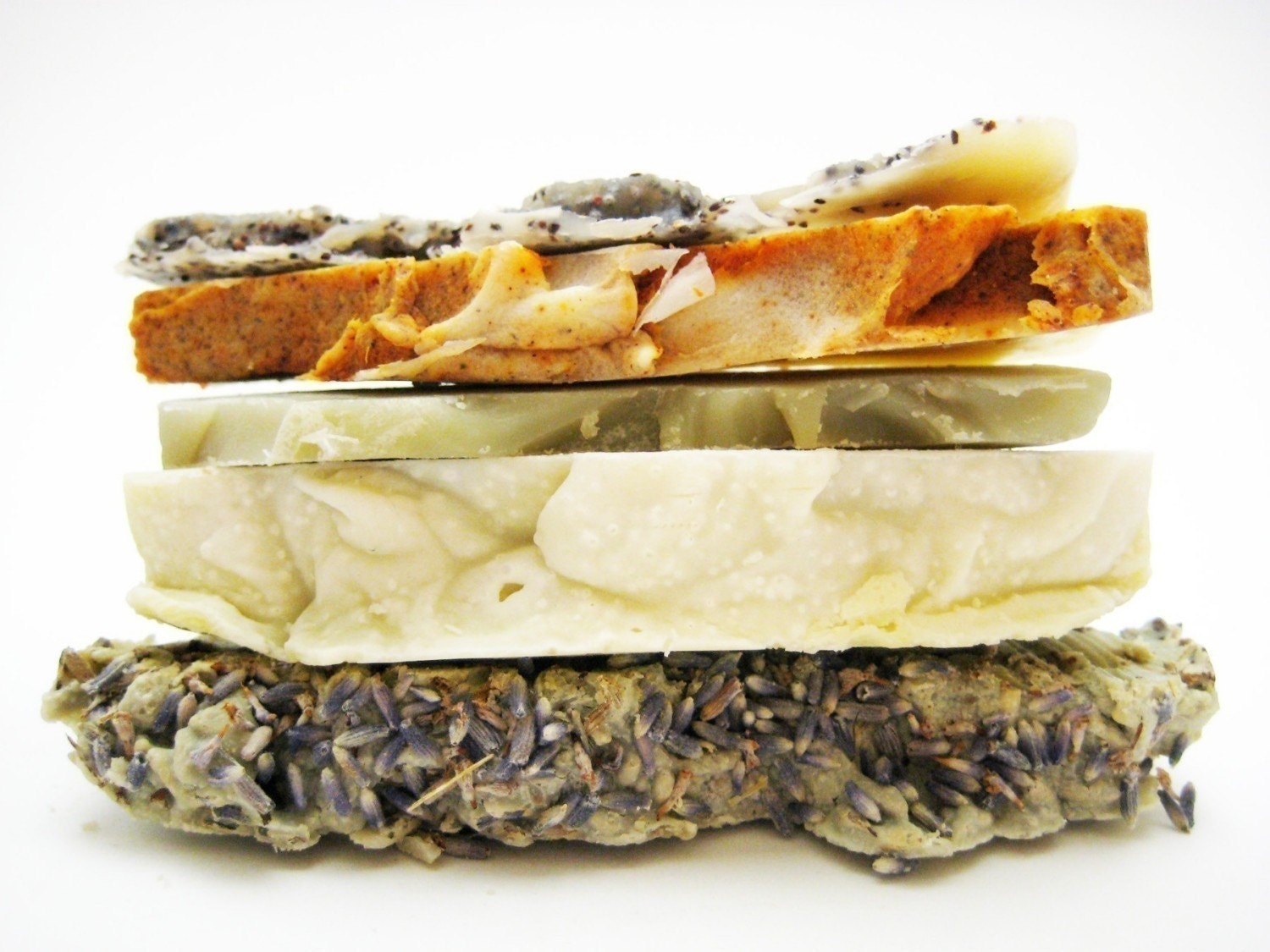
Like our Facebook page to find out what cool things are happening on planet Bambu Earth™ and be the first to get the skinny on product news, giveaways and coupons! You'll be entered to win 4 ounces of Assorted Soap Samples by Bambu Earth™! And FREE Shipping!

Enter our Giveaway HERE

Feel the difference of natural handmade soaps and skincare. Unlike commercial soap, cold process handmade soap retains all of it's naturally occurring glycerin (a humectant that draws in moisture), thereby conditioning your skin and never leaving you feel dry and itchy. And guess what? Our full bars of soap are wrapped in paper that grows wildflowers! Yup, that's right, don't throw away the package. Instead, plant it right in your backyard and watch wildflowers bloom!
Bambu Earth™ Products are always:

• MADE WITH ORGANIC INGREDIENTS
• Phthalate Free
• Paraben Free
• Sulfate Free
• No Synthetic Fragrances
• No Synthetic Dyes
• Sustainable Palm Oil
• Never Tested on Animals

Website: www.bambuearth.com
Blog: www.bambuearth.blogspot.com
Facebook: www.facebook.com/bambuearth
Twitter: www.twitter.com/bambuearth
Pinterest: www.pinterest.com/bambuearth

Enter our Giveaway HERE